Ethereum 2027 Prediction: Danksharding, L2 Dominance, and Staking Supply Squeeze
 November 23, 2026
7 min read
Disclosure: This is scenario analysis and opinion, not financial advice. Nobody can predict where ETH trades in 2027, including us. Figures are from mid-November 2026 and will be out of date quickly. See our full disclaimer.
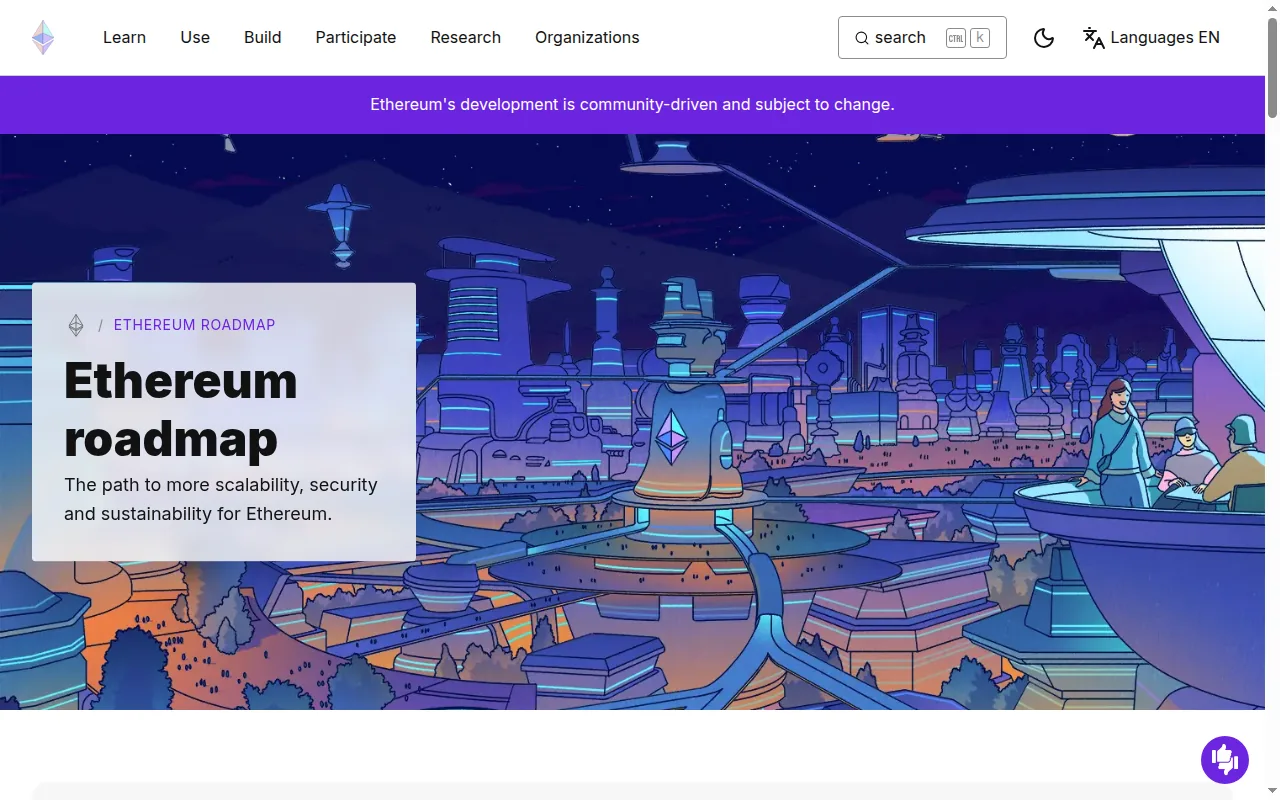
- ETH trades around $1,800 in mid-November 2026, roughly 40% lower than a year ago and well under its August 2025 high near $5,000.
- Full danksharding is not coming in 2027. PeerDAS went live in December 2025; the final step has no date.
- About a third of all ETH is staked, a record, but the yield has dropped to roughly 2.6% and a live proposal would cut it further.
- Our scenarios run from about $1,200 (bear) to a retest of the old high (bull). The $8,000-$12,000 targets floating around need a cycle nobody can see yet.
Most Ethereum 2027 predictions you’ll find were written when ETH was trading near $4,000 and everyone assumed the cycle would keep running. It didn’t. ETH spent autumn 2026 sliding, broke below $2,000 in November, and US spot ETH ETFs have been bleeding outflows.
That doesn’t make Ethereum broken. It does mean any honest 2027 forecast has to start from $1,800, not from a spreadsheet that assumed $5,000 was the floor.
Where Ethereum actually stands
Start with the data that matters for price, not the roadmap slides.
- Price: roughly $1,800, down about 40% year on year. Prediction-market traders in mid-November gave higher odds to a drop to $1,500 before year-end than to a recovery to $3,000.
- Supply: about 122 million ETH, with no hard cap. The “ultrasound money” story took a hit after 2024: once rollups moved activity off mainnet via blobs, the fee burn shrank and net supply has been creeping up, not down.
- Staking: a record share of supply, around 34-35%, is staked. That’s real conviction from long-term holders, including treasury companies like BitMine, which has staked most of its holdings.
- Yield: because so much ETH is staked, the reward per staker has fallen to roughly 2.6%. Less yield means less reason to stake new money.
The roadmap: what’s real and what isn’t
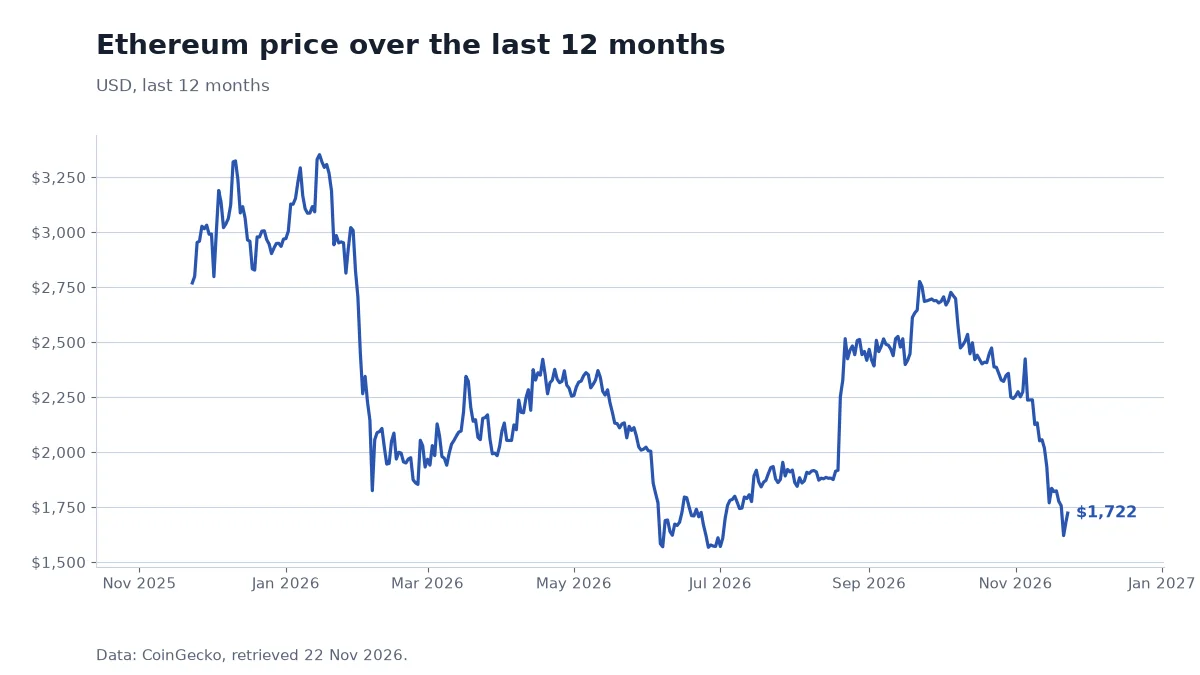
The draft version of this kind of article usually says “Full Danksharding launches by 2027.” It doesn’t. Here’s the actual sequence:
- Dencun (March 2024): introduced blobs, a cheap data lane for rollups. L2 fees dropped sharply.
- Fusaka (December 2025): shipped PeerDAS, so nodes check random pieces of blob data instead of downloading all of it. Blob capacity is now being raised in steps through smaller “blob parameter only” forks.
- Glamsterdam: the next upgrade, focused on mainnet efficiency rather than rollup data. Its headline change is enshrined proposer-builder separation (ePBS).
- Full danksharding: still on the roadmap under “The Surge,” with no deployment date.
This matters for the price case because cheaper L2 data is a double-edged sword. It’s great for users and rollups. It’s not obviously great for ETH holders, because rollups now pay Ethereum very little. That value-capture problem is the most important unresolved question in the whole ETH thesis.
Three 2027 scenarios
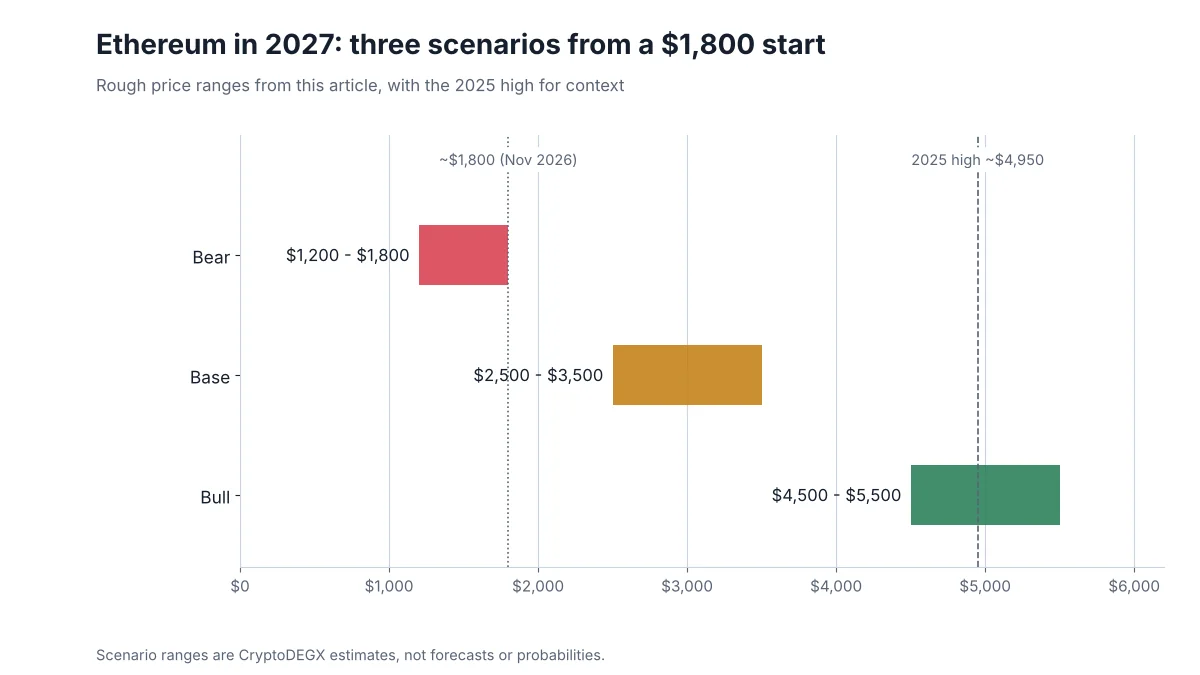
| Scenario | Rough ETH range | What would have to happen |
|---|---|---|
| Bear | ~$1,200-$1,800 | The bear market follows its usual 12-18 month path, ETF outflows continue, risk assets stay weak |
| Base | ~$2,500-$3,500 | Market bottoms in 2026, recovers through 2027, staking ETFs and tokenized assets keep growing slowly |
| Bull | ~$4,500-$5,500 | A new cycle starts early, rate cuts, large ETF inflows, and real evidence that L2 growth feeds back to ETH value |
These are ranges, not targets, and we’re not attaching probabilities to them because doing so would be false precision. The honest point is the spread: the bear and bull cases differ by roughly 4x, which tells you how little anyone can actually see.
Bull factors vs real risks
What supports a recovery
- Still the main settlement layer for stablecoins and tokenized real-world assets
- Record staking from long-term holders and treasury companies
- Steady protocol delivery: Dencun, then Fusaka, both shipped
- Spot ETFs give institutions a regulated route back in when sentiment turns
What could keep ETH down
- Rollups pay Ethereum little; value capture is unresolved
- Supply is growing, not shrinking, at current activity levels
- Persistent ETF outflows through late 2026
- Solana keeps winning retail trading volume
- Liquid restaking adds layered slashing and smart-contract risk
How to act on this
Follow the live price on our Ethereum price page. For larger holdings, keep ETH in self-custody on a hardware wallet such as the Keystone 3 Pro, not on an exchange.
FAQ
What is the Ethereum price prediction for 2027?
There’s no reliable single number. From around $1,800 in November 2026, our scenarios range from about $1,200-$1,800 in a continued bear market, to $2,500-$3,500 in a normal recovery, to $4,500-$5,500 if a new bull cycle starts early. Targets of $8,000 and above would need ETH to rise more than 4x in about a year.
Can ETH reach $10,000 by 2027?
It’s not impossible, but it would take a move of more than 5x from the November 2026 price, well beyond the previous all-time high near $5,000. That would need a strong new cycle, large ETF inflows, and a clear fix for how Ethereum captures value from rollups, all within roughly a year.
Will full danksharding launch in 2027?
There’s no evidence it will. PeerDAS, the first step, shipped with the Fusaka upgrade in December 2025. Full danksharding remains on the roadmap but has no scheduled date, and the next named upgrade, Glamsterdam, focuses on mainnet efficiency instead.
How much ETH is staked?
About a third of the total supply, a record. The staking ratio hit roughly 34.7% in August 2026. As more ETH is staked, the reward per staker falls, which has pushed the yield down to around 2.6%.
Is ETH deflationary?
Not at current activity levels. The EIP-1559 burn only outpaces new issuance when mainnet is busy. Since blobs moved most rollup activity to a cheap data lane, the burn has been smaller and total supply has been rising slowly. ETH can turn deflationary again during periods of heavy on-chain demand.
What is EIP-8361?
A proposal filed in August 2026 by researchers including Justin Drake. It would burn a growing share of validator rewards as the staking ratio rises, lowering the consensus yield from about 2.6% toward 1.2% over roughly 18 months. It’s a proposal, not a scheduled change.
Should I buy ETH now or wait?
We can’t tell you that, and anyone who claims to know the bottom is guessing. If you plan to hold for years, spreading purchases over time reduces the risk of buying at the wrong moment. Only invest what you can leave untouched through further drops.